

Your parts costs are eating your margins. That's the reality most independent repair shops face, especially when you're ordering in small quantities and paying near-retail prices for screens, batteries, and tools. Learning to source affordable phone repair supplies wholesale changes that equation entirely. This article walks you through exactly what to stock, how to find and vet suppliers, what quality traps to avoid, and how to build a sourcing strategy that keeps your shop profitable without sacrificing the repair quality your customers expect.
Table of Contents
- Key takeaways
- What to know before sourcing wholesale phone repair supplies
- How to find and vet affordable wholesale suppliers
- Avoiding quality pitfalls in wholesale phone parts
- Balancing cost, quality, and profitability long-term
- My honest take on sourcing wholesale supplies
- Why Usacellinc is worth a look for your shop
- FAQ
Key takeaways
| Point | Details |
|---|---|
| Know your parts categories | Stock OEM and aftermarket parts strategically based on device type and customer expectations. |
| Vet suppliers before bulk orders | Always request physical samples and certification documents before committing to large purchases. |
| Certifications protect your shop | RoHS and CE certifications on batteries and parts reduce safety risks and customer complaints. |
| Quality verification saves money | Testing incoming bulk shipments catches defects before they reach customers and damage your reputation. |
| Supplier relationships compound | Long-term supplier relationships unlock better pricing, priority stock, and flexible minimums over time. |
What to know before sourcing wholesale phone repair supplies
Before you contact a single supplier, you need a clear picture of what your shop actually needs. Jumping straight to bulk orders without this groundwork is how shops end up with 200 units of the wrong screen size or a toolkit missing the one driver that matters.
Parts, tools, and kits: what to stock
Your inventory falls into three categories: replacement parts, repair tools, and repair kits. Replacement parts include LCD assemblies, batteries, charging ports, back glass, and buttons. Tools cover precision screwdrivers, spudgers, anti-static tweezers, and heat guns. Kits bundle both for specific repair types, which is useful when you're onboarding a new technician or expanding into a new device brand.

Bulk purchasing repair kits suited for shops doing more than ten repairs per week lowers your per-repair cost significantly. The catch is that low-cost kits often skip precision tools like torque-limited drivers and anti-static tweezers, which directly affects repair quality. Buy kits selectively and fill the gaps with individual tool purchases.
OEM vs. aftermarket: making the right call
This is the decision that shapes your shop's reputation. OEM parts guarantee quality and manufacturer backing, while aftermarket parts offer wider availability and lower cost. Neither is universally better. For premium repairs on newer flagship devices, OEM or OEM-compatible parts protect your customer relationship. For budget repairs on older models, quality aftermarket parts are a practical choice.
The key word there is quality. Not all aftermarket parts are equal, and sourcing from reputable vendors is what separates a profitable aftermarket strategy from a return-and-refund nightmare.
Here's what to have clear before you contact any supplier:
- Your top 10 most-repaired device models
- Whether your customers expect OEM or aftermarket (ask them directly)
- Your monthly volume per part category
- Your target cost per repair and current margin
- Certifications you require: RoHS, CE, or both
Pro Tip: Build a simple spreadsheet tracking your repair volume by device model for 90 days before placing any wholesale order. That data tells you exactly what to prioritize and prevents over-ordering slow-moving parts.
How to find and vet affordable wholesale suppliers
Finding cheap phone repair tools and parts is easy. Finding suppliers who deliver consistent quality at low prices is the actual skill. Here's a step-by-step process that works.
-
Start with verified platforms. Alibaba and Made-in-China are the two most practical starting points for sourcing wholesale phone parts from overseas manufacturers. Filter specifically for verified suppliers with trade assurance and a minimum of two years of operation. Avoid new accounts with no transaction history, regardless of how attractive the pricing looks.
-
Search by part number, not just device name. "iPhone 15 screen" returns thousands of listings. Searching by the actual part number narrows results to suppliers who know the spec. This filters out generic resellers and gets you closer to actual manufacturers.
-
Request samples before any bulk order. This is non-negotiable. Starting small and validating part fit and function before scaling reduces expensive mis-orders. Order two to five units of each part you plan to stock. Test them on actual devices in your shop before you commit to a bulk purchase.
-
Ask specific questions during supplier evaluation. What certifications do their batteries carry? What is the return policy for defective units? Do they provide video quality control documentation? What is the minimum order quantity and does it drop with a long-term relationship? Suppliers who answer these questions clearly and quickly are worth pursuing. Vague or delayed responses are a red flag.
-
Verify pricing benchmarks before negotiating. Universal li-ion batteries run $3.20 to $6.80 and iPhone 13 LCD assemblies range from $22 to $34 at wholesale. If a supplier quotes significantly below these ranges, ask why. Pricing that seems too good usually signals lower-grade components or counterfeit parts.
-
Negotiate minimum order quantities. Many suppliers list a minimum order quantity of 50 or 100 units, but that number is often negotiable, especially if you signal intent to become a repeat buyer. Start the conversation by asking what the price looks like at 20 units versus 50 units. The pricing tiers reveal how flexible the supplier actually is.
-
Diversify across two to three suppliers. Relying on a single source for your most critical parts creates real operational risk. If that supplier goes out of stock or raises prices, your shop stalls. Two or three vetted suppliers for your top parts gives you negotiating leverage and supply continuity.
Pro Tip: When evaluating a new supplier, ask for their quality control video for the specific batch you're ordering. Reputable manufacturers record inspection footage. If they can't provide it, that tells you something important about their process.
Avoiding quality pitfalls in wholesale phone parts
This is where most shops learn expensive lessons. The good news is that the mistakes are predictable and avoidable.
The biggest risk with unbranded generic parts is not that they look wrong. It's that they fit and appear to work initially, then fail within 30 to 90 days. That failure lands back on your shop as a warranty claim, costing you a second repair, a replacement part, and a frustrated customer.
Here's what to watch for and verify:
- Tolerance variances in parts. Even within the same model batch, parts tolerances can vary enough to cause fit issues. A screen that physically installs can still have adhesive gaps, touch dead zones, or color calibration problems. Physical sample testing catches this before bulk orders.
- Battery certifications. Batteries without proper certification cause safety and compatibility failures. Require cycle-life certification documentation for every battery supplier. Unbranded cells with no documentation should be rejected outright.
- Supplier documentation gaps. If a supplier cannot provide a CE or RoHS certificate for a part that legally requires one, that is a compliance problem for your shop, not just a quality concern.
- Incoming shipment testing. Test a random sample of every bulk shipment before it goes into your repair workflow. A 5% defect rate sounds small until you realize that means 10 bad screens in a 200-unit order.
"Supply-chain transparency and buyer expectations have increased, making assumptions like 'same model equals fit' risky. Physical samples and certification documents are crucial." — Alibaba Practical Sourcing Guide
One sourcing channel worth knowing about is liquidation. Amazon liquidation pallets can contain new, sealed electronics at a fraction of retail value, offering another way to acquire accessories and devices for resale. The tradeoff is unpredictability in contents and condition, so treat it as a supplement to your primary sourcing strategy, not a replacement.
Balancing cost, quality, and profitability long-term
Getting a good deal on parts once is not a sourcing strategy. The shops that win over the long term build systems around their supply chain.
| Scenario | Best parts choice | Reason |
|---|---|---|
| Premium flagship repair | OEM or OEM-compatible | Customer expectations and device value justify the cost |
| Budget repair on older model | Quality aftermarket | Keeps repair price competitive while maintaining function |
| High-volume commodity repair | Bulk aftermarket with certification | Volume discounts offset per-unit cost |
| Warranty repair | OEM | Protects shop from repeat claims |
Affordable parts sourcing directly impacts repair shop profitability and customer satisfaction. When your cost per repair drops, you have three options: lower your price to win more customers, hold your price and improve your margin, or invest in faster turnaround and better tools. All three are good outcomes.
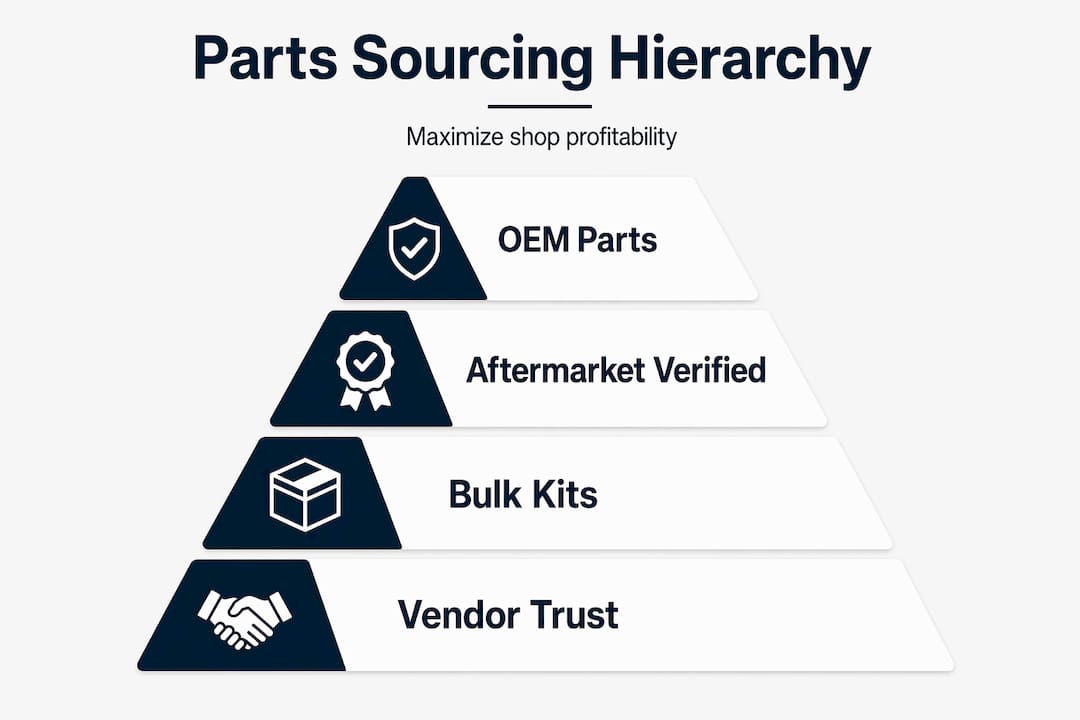
Inventory turnover matters as much as unit cost. Stocking 300 units of a part that moves 10 per month ties up cash that could be working harder. Use your 90-day repair volume data to set reorder points and keep your stock lean on slow movers.
Pro Tip: Negotiate a standing order arrangement with your top supplier for your three highest-volume parts. Predictable volume gives them planning certainty, and that often translates to better pricing and priority fulfillment for your shop.
Supplier relationships compound over time. A vendor who knows your shop, understands your volume, and trusts your payment history will give you access to better pricing tiers, early notice on stock shortages, and flexibility on minimums. That relationship has real dollar value. Treat it like one.
My honest take on sourcing wholesale supplies
I've watched independent shops make the same mistake repeatedly. They find a supplier with attractive pricing, skip the sample step to save time, place a bulk order, and spend the next two months dealing with returns, refits, and angry customers. The math never works out in their favor.
What I've learned is that the sample and validation phase is not a delay. It's the actual work. Every hour you spend testing five sample screens before ordering 100 saves you five hours of rework and one customer relationship.
I've also seen shops over-complicate their supplier roster. Working with eight different vendors to chase marginal price differences creates an administrative burden that erodes the savings. In my experience, two to three deeply vetted suppliers for your core parts outperforms a fragmented approach every time.
The shops I've seen grow consistently are the ones that treat sourcing as a skill they keep developing, not a one-time task. They track supplier performance, renegotiate annually, and stay current on new part categories as device models evolve. That discipline is what separates a shop with healthy margins from one that's always scrambling.
Start with one or two parts categories, validate thoroughly, and scale from there. The compounding effect of getting this right is significant.
— Usacellinc
Why Usacellinc is worth a look for your shop
If you want to source affordable phone repair supplies wholesale without the friction of membership fees, minimum order requirements, or opaque pricing, Usacellinc is built specifically for shops like yours. They offer discounts of up to 70% off MSRP across more than 15,000 products, covering iPhone, Samsung, Motorola, and more.
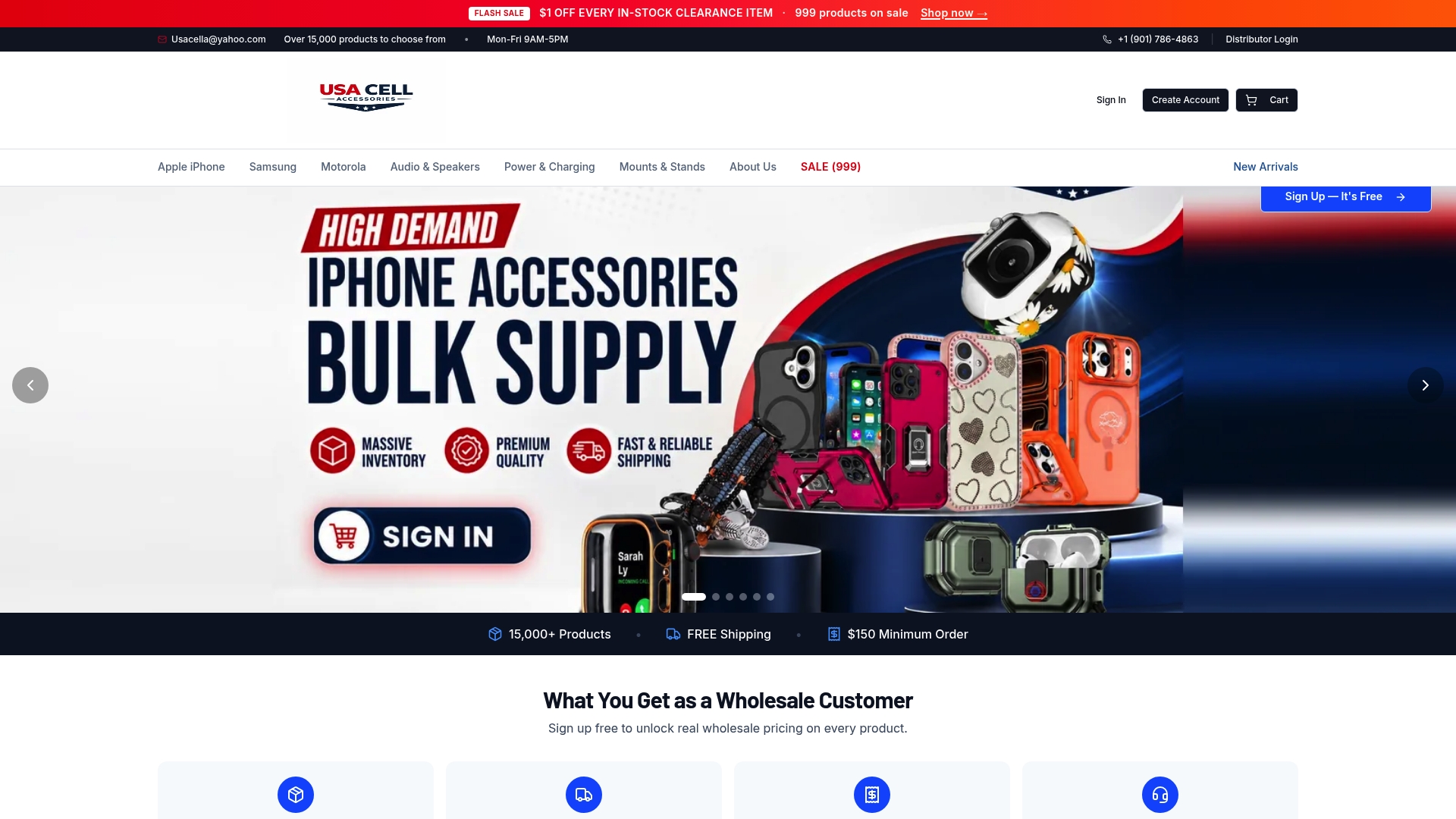
What makes Usacellinc different from traditional wholesale distributors is the flexibility. You can buy a single unit at wholesale pricing, which means you can test new product lines without committing to bulk orders. Most orders ship the same day, and their inventory updates in real time so you're not ordering parts that are actually out of stock. For shops stocking wholesale iPhone accessories or expanding into Samsung wholesale accessories, the catalog depth and pricing structure make it a practical first stop before going overseas.
FAQ
What types of supplies should I buy wholesale for my repair shop?
Stock replacement parts (screens, batteries, charging ports), precision repair tools, and repair kits in bulk. Prioritize the parts that match your top 10 most-repaired device models.
How do I verify a wholesale phone parts supplier is legitimate?
Request physical samples, ask for RoHS or CE certification documents, and check for trade assurance on verified platforms. Suppliers who cannot provide documentation or samples should be avoided.
Are aftermarket phone parts worth buying wholesale?
Yes, when sourced from reputable vendors with certifications. Aftermarket parts offer affordability and wide availability, making them a solid choice for budget repairs and older device models.
What is a realistic wholesale price for common phone parts?
Wholesale pricing for li-ion batteries runs $3.20 to $6.80 per unit, and iPhone 13 LCD assemblies range from $22 to $34. Prices significantly below these ranges warrant extra scrutiny.
How many suppliers should a small repair shop work with?
Two to three vetted suppliers for your core parts is the practical target. It gives you supply continuity and negotiating leverage without the administrative complexity of managing too many vendor relationships.